Ace Your 2026 Interview: AI Prep for Role Questions
Introduction
AI-powered role-specific interview prep uses your job description and resume to generate targeted practice questions, mock interviews, and structured feedback — turning last-minute panic into a focused, repeatable plan. Generic preparation no longer works when an Applicant Tracking System (ATS) scans the resume, an AI interview tool rates the video, and a hiring manager expects sharp, role-specific stories on top of that. That is exactly what Ace Your 2026 Interview: AI Prep For Role-Specific Questions is designed to solve.
I have watched interviews shift from casual chats to high-stakes assessments where both people and algorithms are judging every word, pause, and facial twitch. Winging it is just another way of saying, "I hope this goes well, but I have no plan."
In this article, I am going to walk through a clear, practical way to handle 2026-style interviews using AI instead of guessing in the dark. The focus is simple: build prep around the exact role you want, master the four question types you will face, and use tools like ShviiAI to practice in a way that lines up with how companies now hire. By the end, you will know what to practice, how to practice, and how to turn your real experience into answers that land.
"By failing to prepare, you are preparing to fail." — Benjamin Franklin
That quote has floated around for centuries, but it fits modern interviews perfectly.
Key Takeaways
AI Now Sits In Almost Every Step Of Hiring. From resume screens to video analysis, software is scanning for very specific signals. When you prepare with role-specific interview questions instead of random lists, you give both humans and algorithms what they are trained to spot. Prep turns from guesswork into a focused plan.
Strong Answers Are Structured, Not Just "Good Stories." The best interview answers use frameworks like the STAR method and back up claims with evidence. Modern AI interview prep tools help you build these stories, practice them out loud, and check your delivery on camera. Over time, that practice turns nervous rambling into calm, confident responses.
Human Skills Still Decide Who Gets Hired. Critical thinking, emotional intelligence, and adaptability are hard for any model to rate the way a real person can. When you combine AI-powered prep with those meta-skills, you stop just "showing up" and start standing out.
Why 2026 Interviews Are Playing By An Entirely New Set Of Rules
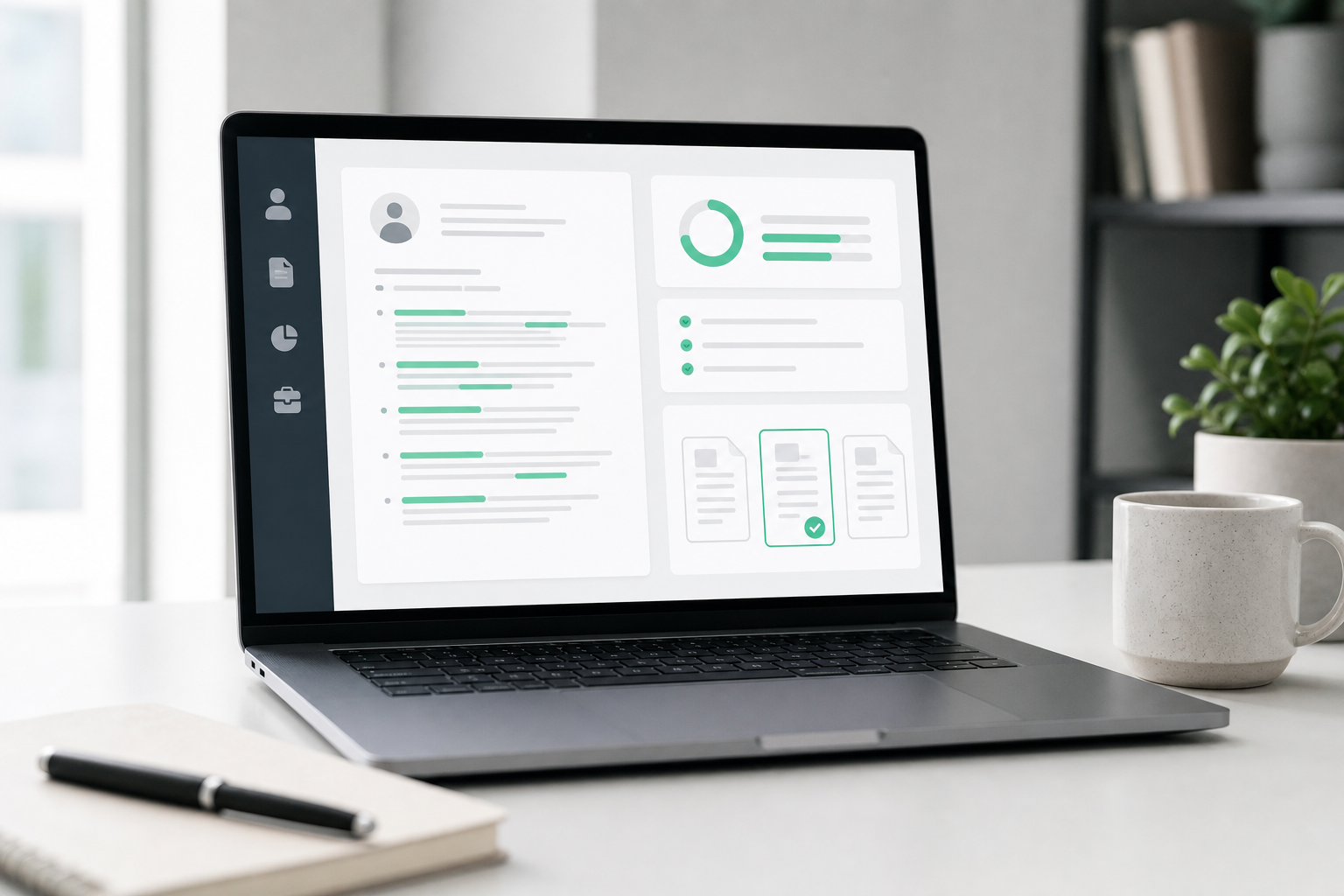
In 2026, job interviews operate across at least three distinct evaluation layers — automated resume screening, AI-powered video analysis, and live role-specific assessments — before a hiring decision is made. Before a recruiter even looks at a resume, an Applicant Tracking System (ATS) has often already scanned it for keywords that match the job description. Miss those phrases and it can be game over before anyone hears your name. According to the Society for Human Resource Management (SHRM), the majority of large employers now use ATS software as a first filter in their hiring pipelines.
From there, many companies run candidates through AI-driven hiring tools such as HireVue, Pymetrics, or Talview. These platforms look at vocal tone, word choice, pacing, and even micro-expressions during video answers. They are not judging like a human does, but they still produce a score that helps decide who moves forward and who gets cut.
The interview itself has shifted as well. Instead of walking through your resume line by line, many hiring managers jump straight into real-time scenarios and role-specific challenges. They want to see:
How you think on your feet
How you solve problems with the tools of that role
How you handle pressure when a camera is running
As one senior recruiter put it to me, "The interview starts long before you join the video call — it starts when the software reads your resume."
This means the competition is not only other candidates; it is also ranking systems that work at scale. Showing up with the same old "biggest weakness" answer copied from a forum is a fast way to blend into the crowd. When I talk about Ace Your 2026 Interview: AI Prep For Role-Specific Questions, I mean treating prep with the same seriousness as the systems you are facing. Once that reality is clear, the next step is using AI on your side instead of only facing it on theirs.
How To Use AI To Prepare For Role-Specific Interview Questions

AI interview prep is not magic. It is structured, targeted practice based on your goal role and your real background. Instead of scrolling through random question lists, you feed in the job description and your resume, and let the tool generate a focused question set built for that match.
Here is how that looks in practice:
Analyze The Role. An AI prep tool scans the job post for skills, tech stack, and core responsibilities. It looks for repeated keywords and phrases that signal what matters most in the role.
Compare With Your Background. The tool checks those requirements against your resume and profile. This highlights both overlaps (your strengths) and gaps (areas to prepare for more carefully).
Generate Role-Specific Questions. Based on that comparison, the system builds a question bank that sounds like what a real hiring manager would ask for that job. You do not just get "What are your strengths?" You get:
"Walk me through how you shipped a feature with conflicting stakeholder demands" if you are targeting product roles.
"How do you debug a failing data pipeline?" if you are going for data roles.
"How would you prioritize bugs versus new features in a sprint?" if you are aiming at engineering or PM roles.
Run Mock Interviews. You answer these questions out loud, usually on camera, while the system tracks your pace, filler words, and body language. It can flag when you say "um" every third word, when you talk in circles, or when your answer drifts without a clear result. This is the kind of feedback most friends will not give and most coaches charge a lot for.
Shape And Refine Your Answers. AI can act like a writing partner for your answers. You bring the raw story and the tool helps you shape it into a clean STAR structure — with a clear Situation, Task, Action, and Result. Over several rounds, you learn how to build that kind of answer on your own, without sounding scripted.
This is exactly where ShviiAI fits in. Instead of one more single-purpose app, ShviiAI puts interview prep next to six other job tools in one AI-powered career dashboard:
Resume builder
Job tracker
LinkedIn optimizer
Cold DM / outreach message creator
Performance review support
Salary calculator
Interview prep and mock interviews
With its pay-per-use credits that never expire, you can ramp up practice when you need it without a monthly fee ticking away while you wait for callbacks. Compared with doing everything by hand or juggling pricey subscriptions, using ShviiAI to prepare for role-specific questions feels like training with a coach who actually read the job post.
The Four Question Categories Every Interviewer Will Hit You With

Almost every interview in 2026 falls back on the same four question types, no matter the industry. Once these categories are clear, prep becomes much less random and a lot more focused.
Behavioral Questions
These dig into how you acted in real situations. Think of prompts such as:"Tell me about a time you disagreed with a manager."
"Describe a situation where you failed."
This is where your STAR stories shine. Interviewers listen for how you handle conflict, take ownership, and move past mistakes without blaming others.
Role-Specific Technical Questions
These check how you think with the tools of the job. A hiring manager might ask:"Walk me through how you would improve our onboarding funnel."
"How would you redesign this dataset for better reporting?"
The goal is not only to be right; it is to show a clear process that matches the job description. A smart move is to pull out the top three to five skills listed in the posting and prepare one or two STAR examples for each one.
Company-Focused Questions
These test preparation and intent. When someone asks, "What do you know about our current challenges, and how do your skills help?" they are checking whether you read more than the About page. Strong answers here tie your past wins to their products, markets, or recent news.Personal And Professional Growth Questions
These help hiring teams see where someone is heading. Expect prompts such as:"Where do you see yourself in five years?"
"What are you working on improving right now?"
The sweet spot is showing clear ambition that aligns with how that company grows people.
A classic hiring mantra says, "Past behavior is the best predictor of future performance."
Knowing these four buckets is step one. The real advantage comes when you start structuring your answers for each type so they stick in the interviewer's mind instead of blending into another forgettable reply.
Structure Your Answers Like A Pro — STAR Method And The Human Edge AI Can't Replicate
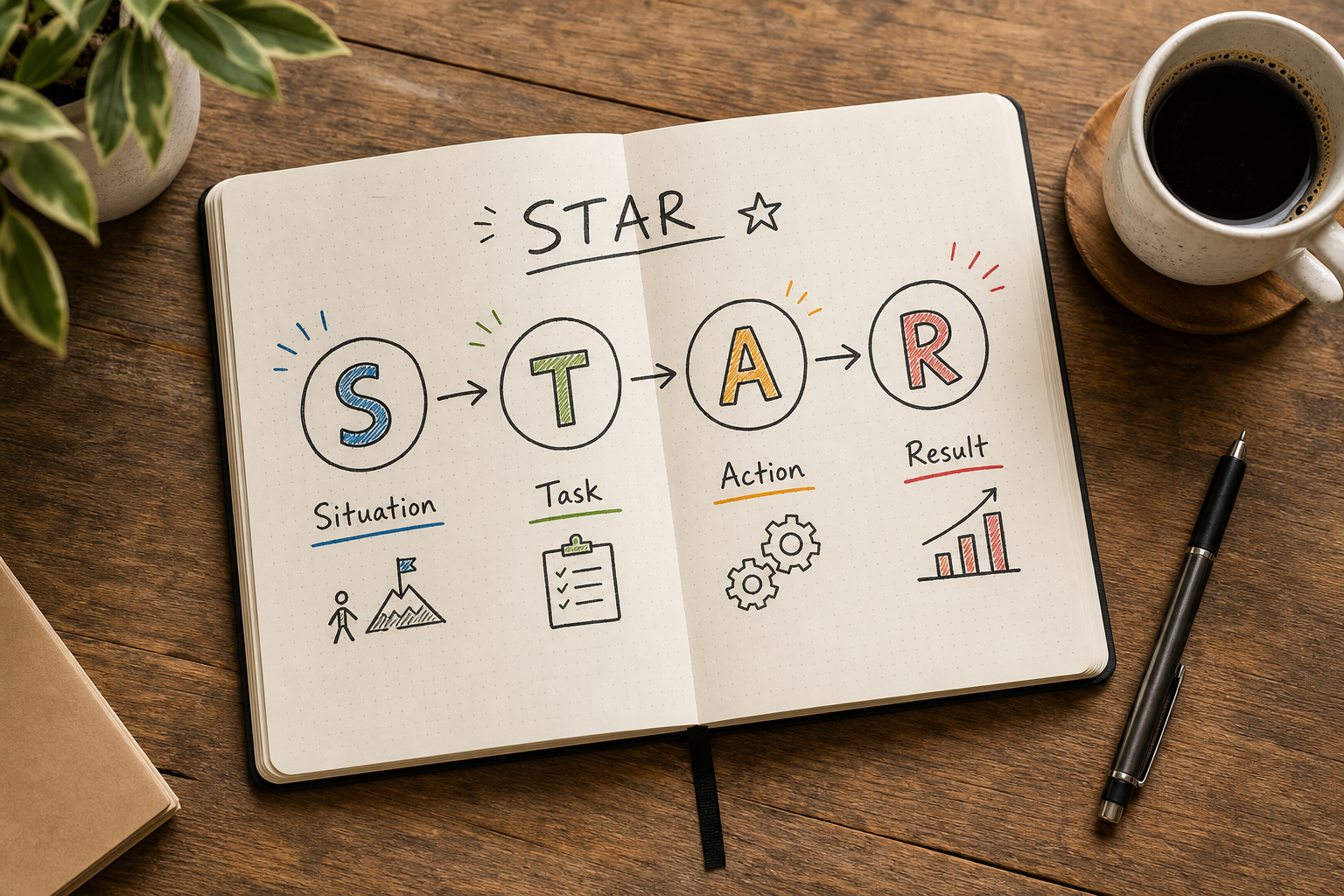
The STAR method — Situation, Task, Action, Result — is the single most effective framework for structuring behavioral interview answers, and research in structured interviewing published by the American Psychological Association confirms that structured responses improve both interviewer comprehension and candidate evaluation scores. The most common problem in practice is not lack of experience; it is messy stories that lose the listener before the result is even reached. That is where the STAR method earns its place — giving your answers a clear path so a hiring manager can follow what happened and why it matters.
You can think of a strong STAR answer like this:
Situation (≈20%)
In a few lines, explain the context: the team, the project, the problem, and any key constraints.Task (≈10%)
Spell out what you were responsible for in that moment. What was expected of you?Action (≈60%)
Spend most of your time here. Break down what you did step by step, and use "I," not "we," so your contribution is clear. Mention the tools, decisions, trade-offs, and cross-team work involved.Result (≈10%)
Close with what changed. Use numbers wherever you can, such as "cut time to ship by 25 percent" or "raised retention by five percentage points in one quarter." If you add a short "Here is what I would do differently next time" at the end, you also show self-awareness and learning.
To make this practical, build five to eight STAR stories that cover themes such as:
Leadership or ownership
Conflict with a coworker or stakeholder
Tight deadlines or high-pressure situations
A failure and what you learned
Innovation or improvement you introduced
On top of structure, there is a layer no AI tool can copy for you: meta-skills. Critical thinking, creativity, emotional intelligence, and adaptability show up in:
How you choose examples
How you handle tough follow-up questions
How you react when something goes off script
You build these by taking on stretch work, asking for feedback, and saying yes to messy problems, not just clean tasks. AI can help you practice the words, but that human edge is what people remember when they decide who to hire.
As the saying goes in many hiring teams, "Hire for attitude, train for skill." Your stories should show both.
How ShviiAI Fits Into Your 2026 Interview Prep Strategy
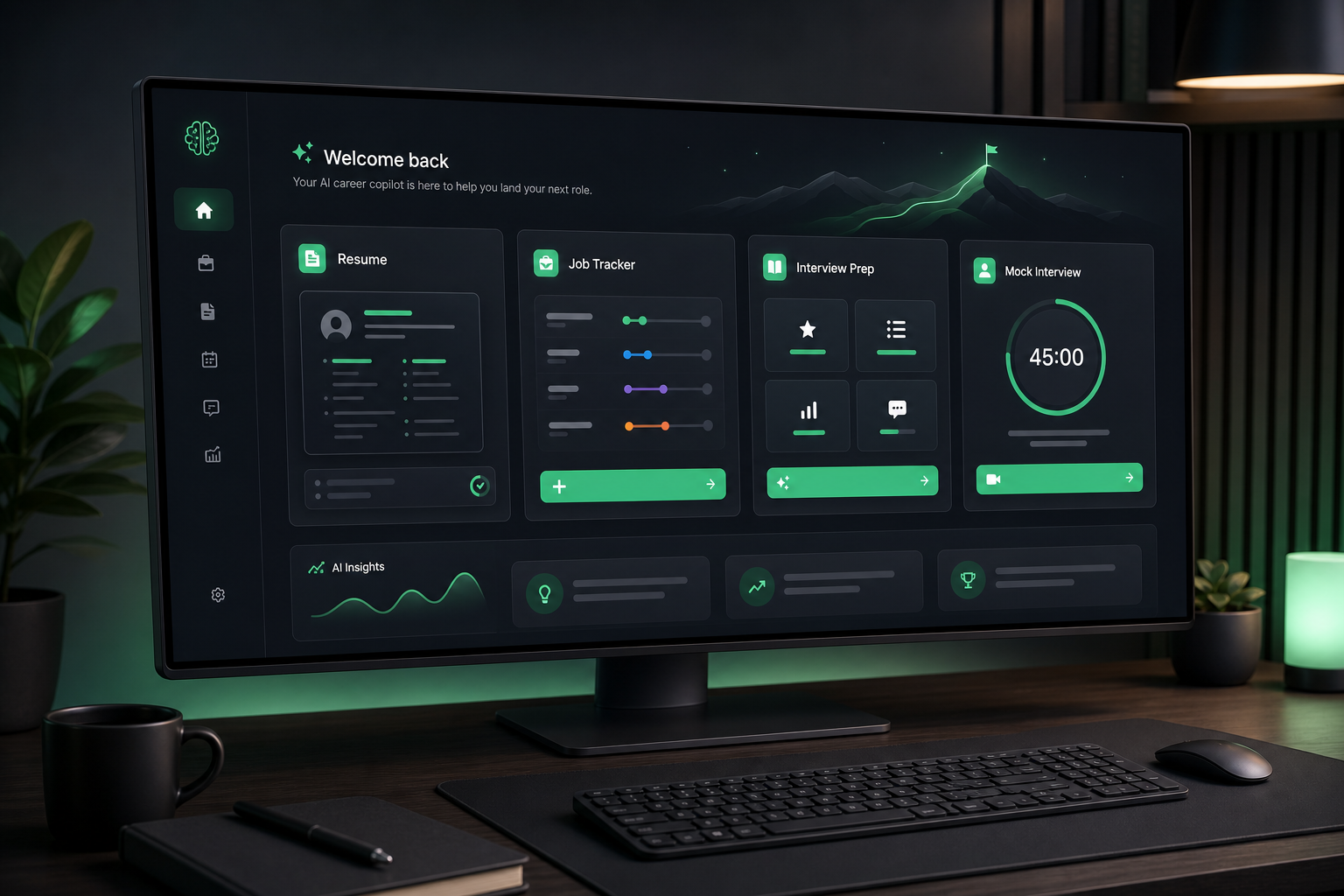
Candidates who consolidate their job search tools into a single AI-powered platform complete more targeted practice and waste less time switching between apps — and that is exactly the problem ShviiAI was built to solve. ShviiAI is an AI-powered career dashboard that brings together resume building, job tracking, LinkedIn optimization, and role-specific interview prep in one place, eliminating the fragmented, multi-tool approach that slows most job seekers down. According to U.S. Bureau of Labor Statistics data on job openings and labor turnover, candidates today face a more competitive market than at any point in the past decade, making a consolidated and targeted prep strategy more valuable than ever. Most job seekers are juggling resumes in one app, job tracking in a spreadsheet, interview questions in random docs, and an expensive coaching subscription they barely use. More tools do not always mean more progress; often they just mean more tabs and more stress.
ShviiAI was built to cut through that mess. Instead of seven different products, it offers seven career tools inside one AI-powered dashboard:
Interview prep and mock interviews
Resume builder
Job tracker
LinkedIn profile optimizer
Cold outreach / DM message creator
Performance review helper
Salary calculator
Because everything lives in the same place, your prep stays tied to the real roles you are chasing:
The interview questions ShviiAI generates line up with the job posts you are tracking.
The skills highlighted in your resume match the ones you practice out loud.
Your outreach messages and LinkedIn profile point at the same strengths you discuss in interviews.
You are not practicing in a vacuum; you are rehearsing for very specific conversations.
The credit model is simple on purpose. There is no monthly fee and no risk of paying for a year while stuck in a hiring freeze. You buy credits when you need them, and they never expire. That setup fits active job seekers, mid-career professionals planning a move, or graduates entering a tough market who want smart support without a long bill.
If the goal is to stand out instead of just show up, ShviiAI turns all the ideas in this article into concrete steps you can take this week.
Conclusion
Candidates who prepare with role-specific AI tools and structured answer frameworks are measurably better positioned to clear the automated filters and live assessments that define 2026 hiring. When you understand how ATS filters, video scoring, and role-specific assessments work, the process feels less like a mystery and more like a game with clear rules. Understanding how to pass a job interview in 2026 confirms that candidates are far from powerless when they prepare with intent.
The winning formula is simple to state and hard to skip:
Study the hiring systems behind the scenes
Prepare with focused, AI-driven question banks
Practice out loud with mock interviews
Shape your stories with the STAR method
Then let your meta-skills do the rest, showing how you think, adapt, and work with other people.
ShviiAI sits in the middle of all that, turning scattered prep into one clear plan with tools built around the roles you actually want. If you are ready to stop guessing and start preparing with intent, stepping into your next interview can feel a lot less like panic and a lot more like a performance you trained for.
Prep Smarter for Your Next Interview
Try Shvii AI TodayFAQs
What Is The Best Way To Prepare For Role-Specific Interview Questions?
The best starting point is the job description itself. Highlight the top three to five skills, tools, or responsibilities that appear again and again. Build at least one STAR story for each of those, showing where you used that skill in real work. Then use an AI interview prep tool to generate realistic practice questions and record yourself answering them, so you can spot weak spots in both content and delivery.
Can AI Really Help Me Prepare For Job Interviews?
Yes, when used well, AI can make prep much more targeted and efficient. Modern tools do more than spit out generic questions; they can read a job post, compare it with your background, and create a custom practice set. They also run mock interviews, give feedback on pace and clarity, and help you shape strong STAR answers. Platforms like ShviiAI connect this interview prep with your resume, job tracking, and outreach, so prep sits inside your full search instead of off to the side.
How Does AI Screening Work In 2026 Job Interviews?
AI screening usually starts with ATS software that reads resumes and looks for keywords matching the job description. If those signals are missing, the resume may never reach a human. For video stages, tools such as HireVue, Pymetrics, or Talview can analyze speech, timing, and facial cues to score responses. Knowing this, candidates can:
Match the language of the job post
Practice speaking clearly on camera
Prepare direct, structured answers that give both humans and algorithms what they are looking for
What Is The STAR Method And Why Does It Matter For Interviews?
STAR stands for Situation, Task, Action, Result. It is a simple way to turn a messy story into a clear, focused answer:
You set the context (Situation).
You define your role (Task).
You walk through what you did (Action).
You finish with what changed (Result), ideally with numbers.
This makes your answer easy to follow, easier to remember, and easier for hiring managers to compare with other candidates, which is why it remains a favorite structure across roles and industries.
Keep going
Useful next steps from this article — tools to apply the advice, plus related career guides.
Tools
Related career guides
Account Executive Career Guide
Quota, attainment, and deal size. The sales resume is its own genre with its own rules.
Business Analyst Career Guide
The bridge role between business and engineering, and the bridge into both from elsewhere.
Customer Success Manager Career Guide
How to show impact when you do not carry a quota. The hardest resume problem in go to market.